
A restaurant can have great food, warm service, and a beautiful fit-out, but many customers will never discover that if they cannot see the menu online.
For most people, the menu is not a small detail. It is the decision point.
Before they visit, before they book, before they order, and often before they even consider your restaurant seriously, they want to know one simple thing: what do you serve?
If that answer is hard to find, missing, outdated, or buried inside a social post from months ago, many potential customers will move on. They will choose a venue that makes the decision easier.
That is the real cost of not having your menu online. It is not just a branding issue. It is lost attention, lost trust, lost visits, and lost repeat business.
This article explores why missing online menus quietly hurt restaurants every day, how customers actually make dining decisions, and why making your menu easy to find is one of the simplest ways to win more business.
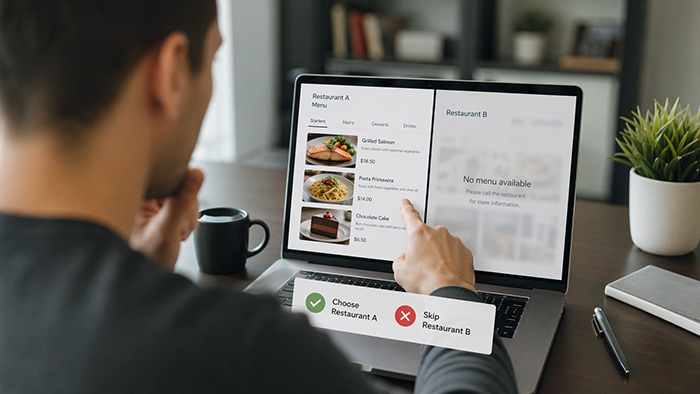
The Menu Is the Product
Restaurants sometimes think of the menu as a document that belongs inside the venue. Something handed to customers once they are already seated.
But online, the menu is much more than that.
It is your product catalogue, your storefront, your first impression, and your best sales tool. It tells people whether your restaurant fits their appetite, budget, dietary needs, occasion, and expectations.
When people search for a place to eat, they are usually trying to answer practical questions like:
- Is there something I want to eat here?
- Is this place in my budget?
- Is it good for a quick lunch, date night, family dinner, or group meal?
- Are there vegetarian, vegan, gluten-free, or kid-friendly options?
- Does the food look interesting enough to justify the visit?
- Can I order direct from them?
- Is this worth leaving the house for?
The menu answers almost all of those questions.
If your restaurant does not show the menu online, customers are forced to guess. Most people do not like guessing when they are hungry, short on time, or choosing where to spend money.
They do not usually call. They do not usually send a message. They do not usually wait. They go to the next option.
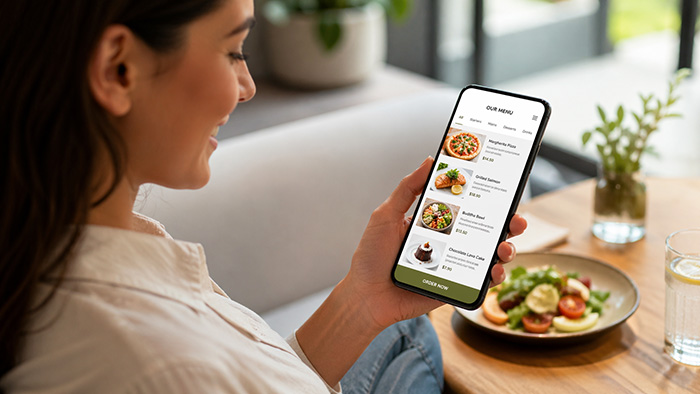
Customers Do Not Search for Restaurants the Way Owners Think They Do
Many restaurant owners assume that people first choose a restaurant name, then look for details.
In reality, many people begin much earlier in the decision journey. They do not always know where they want to go yet. They are searching by need.
They search for things like:
- best pasta near me
- burgers open now
- vegan lunch South Yarra
- cocktails and share plates
- gluten free brunch Melbourne
- takeaway sushi nearby
- steak restaurant with kids options
- late night dessert
Those are menu-led searches, not brand-led searches.
The customer is not loyal to a name yet. They are loyal to the outcome they want.
That means restaurants without a visible online menu are often invisible during the exact moment the customer is deciding.
You may be a perfect fit for what they want, but if the internet cannot clearly show that, you lose the chance before the customer ever reaches your door.
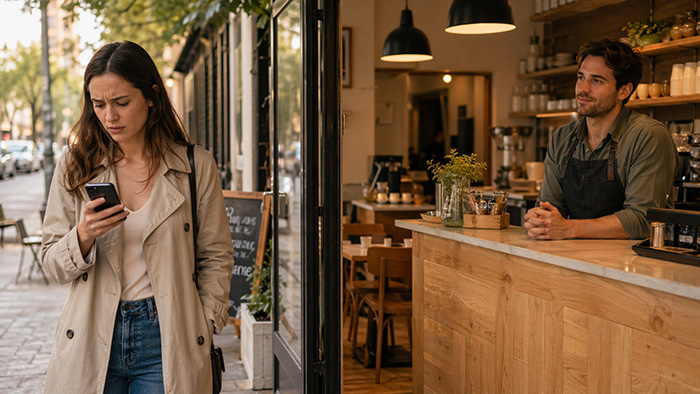
No Menu Means Higher Friction
Every missing piece of information creates friction.
In hospitality, friction kills momentum.
A customer who cannot quickly see what you serve now has to do extra work. They may need to:
- search more pages on your website
- open your Instagram and scroll through old posts
- check review photos hoping someone uploaded a menu shot
- click a PDF that loads badly on mobile
- guess your price point from food photos
- call the venue
- compare you against another restaurant with a clearer menu
That is too much effort for most people.
When people are choosing where to eat, they want speed and confidence. The restaurants that win are often not just the best restaurants. They are the easiest restaurants to understand.
A clear online menu reduces effort. It helps customers move from curiosity to action fast.
A missing menu interrupts that path.
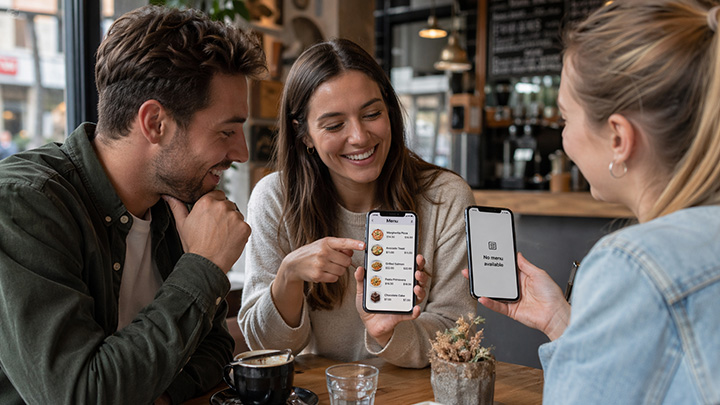
Restaurants Lose Impulse Decisions
Not every customer plans far ahead. Many restaurant choices happen in the moment.
Someone is walking nearby. Someone is in the office deciding lunch. Someone is at home choosing takeaway. Someone is meeting friends and trying to agree on a place. Someone is hungry and does not want a research project.
These are high-intent moments.
If your menu is online and easy to view on mobile, you can capture those moments.
If it is missing, the customer often chooses a competitor within minutes.
This is especially important for:
- lunch venues
- takeaway and pickup
- casual dining
- coffee shops and cafes
- bars with food
- quick-service restaurants
- family venues where people want certainty before arriving
Impulse decisions reward clarity. Restaurants that show the menu clearly are easier to choose fast.
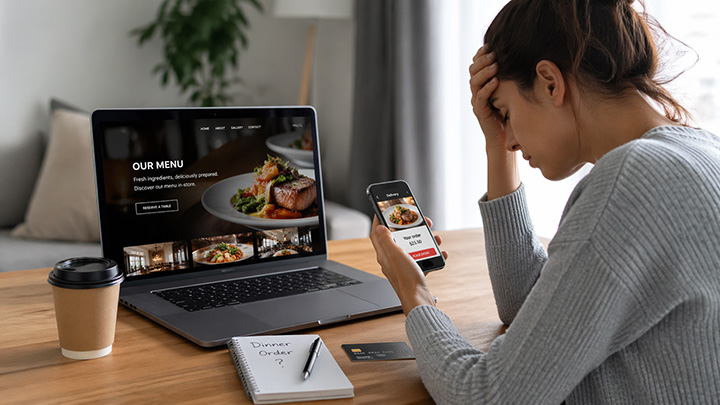
Missing Menus Create Doubt
People read a missing menu as a signal, even if that signal is unfair.
When customers cannot find a menu, they may start to wonder:
- Is the website outdated?
- Has the business changed ownership?
- Are prices too high to show clearly?
- Is the offering inconsistent?
- Do they not care about the online experience?
- Will ordering or booking also be difficult?
These doubts may never be spoken, but they affect behaviour.
Online trust is built through simple things done well. A complete menu, current hours, basic contact details, and easy-to-find links make a restaurant feel active and dependable.
When a menu is absent, the restaurant can feel harder to trust.
In a competitive market, small doubts are enough to send people elsewhere.
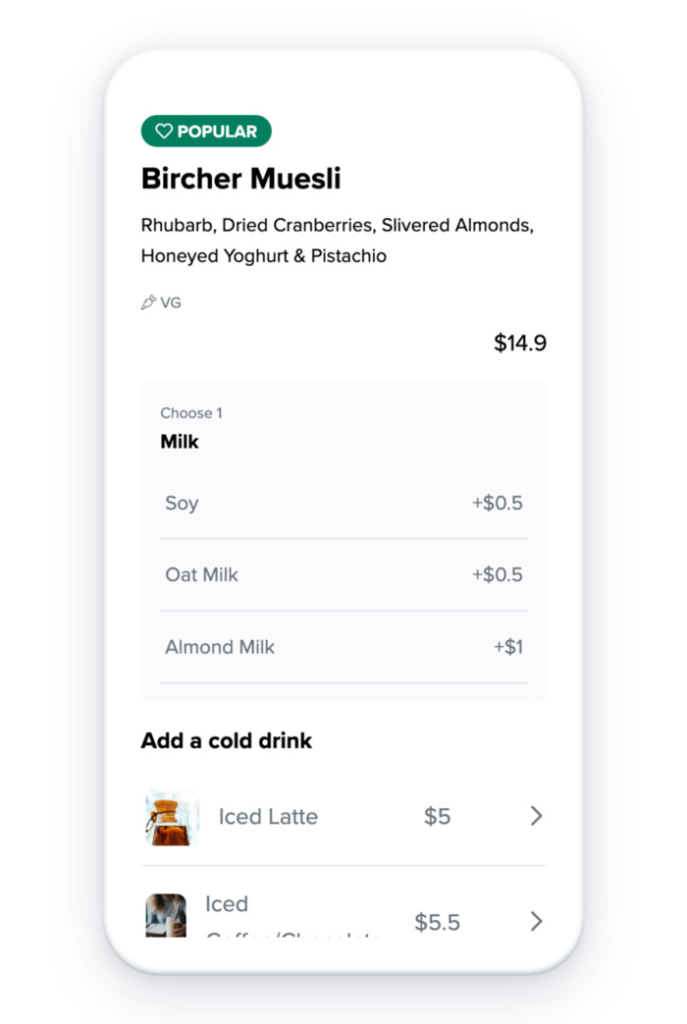
Customers Want to Pre-Qualify Before They Visit
Most people do not want surprises when choosing a restaurant.
They want to know whether the place is right for them before committing time, travel, money, and attention.
The menu helps them pre-qualify the experience.
A couple deciding on date night may want to see if the food feels shareable and interesting.
A parent may want to know if there are simple options for kids.
A group organiser may need to check variety, price range, and dietary coverage.
A solo diner may want to know whether there are lighter meals or quick options.
An office worker may need to know whether lunch can be done within budget and time.
A tourist may want reassurance that the venue matches what they had in mind.
If you make people work too hard to answer those questions, many will not bother. They will choose the place that gives them confidence sooner.
The online menu is how customers decide whether your restaurant belongs on their shortlist.
Social Media Is Not a Menu Strategy
Some restaurants rely on Instagram or Facebook instead of maintaining a proper online menu.
The problem is that social media is built for discovery and attention, not structured decision-making.
A customer can see that your food looks good on social media, but still be left wondering:
- What exactly do you serve?
- What does a meal likely cost?
- What is available right now?
- Are there mains, snacks, desserts, and drinks?
- What options suit my dietary needs?
- Can I order directly?
- Is this menu current?
A feed full of beautiful food photos does not replace a proper menu.
It creates desire, but it does not always close the decision.
Restaurants need both. Social media creates interest. A structured online menu converts that interest into visits and orders.
Without the second part, the first part underperforms.
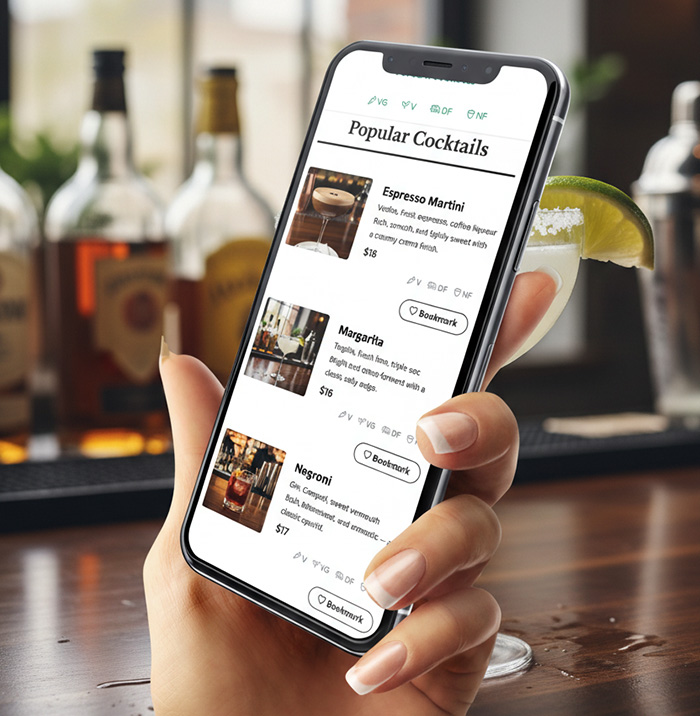
PDFs Often Create the Same Problem as Missing Menus
Some restaurants technically have a menu online, but it is still hard to use.
This commonly happens when the menu is uploaded as a PDF or image rather than displayed in a mobile-friendly, searchable format.
That creates problems:
- slow loading on phones
- small text that forces pinching and zooming
- bad user experience on social browsers
- poor visibility in search engines
- outdated versions staying live
- inaccessible formatting
- no structured data for menu items or categories
From the customer’s point of view, a hard-to-use menu can feel almost as bad as no menu at all.
The standard is not simply “menu exists somewhere.” The standard is “menu is easy to find, easy to read, and easy to act on.”
Missing Menus Hurt Direct Orders
Restaurants that want more direct orders need to make the path from discovery to action as short as possible.
If a customer sees your food online and wants to order, the next step should feel obvious. They should be able to browse the menu and place an order without confusion.
When the menu is missing, direct ordering becomes harder because customers cannot confidently choose. They may end up going to a marketplace app, a competitor, or deciding not to order at all.
This matters because menu visibility is closely tied to revenue quality.
A restaurant that owns the menu experience is in a stronger position to:
- encourage direct pickup or takeaway
- upsell better
- communicate specials clearly
- show bundles or add-ons
- guide customers to the right dishes
- collect customer data more effectively
- bring customers back later
If a restaurant only appears through third parties or scattered platforms, it loses control over how the menu is presented and how customers flow back into the business.
The online menu is not just informational. It is part of the direct-order engine.
Missing Menus Reduce Return Visits Too
The first visit is only one part of restaurant growth.
Great restaurants also need repeat customers, and the menu plays a major role there too.
Returning diners often check the menu before coming back. They want to know:
- what is new
- whether favourite items are still available
- whether seasonal specials are on
- whether the group they are bringing will have enough choice
- whether the current pricing still suits the occasion
If the menu is hard to find, return visits become less automatic.
A good online menu keeps your restaurant top of mind between visits. It gives past customers a reason to re-engage. It helps them imagine the next meal.
That is a subtle but powerful advantage.
Restaurants do not only need to be remembered. They need to be easy to re-choose.
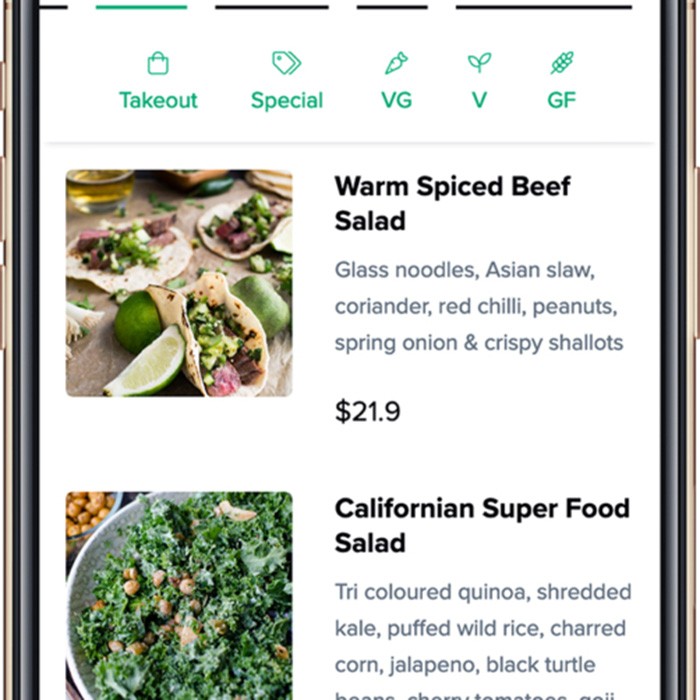
Search Engines Need Menu Content Too
A proper online menu is not only for people. It also helps search engines understand what your restaurant actually offers.
When menu items, categories, cuisine signals, dietary tags, and related content are structured clearly, your restaurant has a better chance of appearing in relevant searches.
Search engines are much better at understanding pages than vague brand promises.
A homepage saying “fresh food and warm hospitality” is not enough.
A menu page showing burgers, ribs, cocktails, gluten-free sides, kids meals, or vegan bowls gives search engines far more useful context.
That improves your chance of being discovered by people searching for specific food or dining intent.
When the menu is missing, search engines have less to work with. Your restaurant becomes harder to match with real customer demand.
That means fewer qualified discovery opportunities.
Missing Menus Weaken Paid Marketing Too
Restaurants sometimes spend money driving traffic from ads, social media, or local campaigns to websites that do not clearly present the menu.
That reduces conversion.
Even if the ad is good, the visitor still needs confidence. If they land on a page without a clear menu, the decision stalls.
A strong online menu makes all other marketing work harder.
It improves:
- ad conversion
- QR code scans
- social traffic performance
- Google Business Profile clicks
- email and SMS campaign effectiveness
- influencer traffic
- local search visibility
In other words, the menu is not a separate asset. It is central infrastructure.
When it is missing, every traffic source becomes less effective.
Customers Compare Restaurants Side by Side
Restaurants do not compete in isolation.
A potential customer will often compare several venues at once. They may have five browser tabs open. They may be switching between Google, Instagram, maps, group chats, and review sites.
In that environment, the restaurant with the clearest online menu has a major advantage.
It is easier to understand.
It is easier to share with friends.
It is easier to approve for the group.
It is easier to justify.
It is easier to choose.
When your competitor shows a clean, current menu with obvious pricing, dietary cues, and ordering links, and your restaurant shows only a vague website or an old PDF, the customer decision becomes much easier for them.
Unfortunately, it is often easier in the wrong direction.
The Problem Is Bigger for Independent Restaurants
Large chains have strong brand familiarity. People may already know roughly what they serve.
Independent restaurants do not always have that advantage.
For independents, the online menu often carries more weight because it helps explain the concept quickly.
It answers:
- What kind of place is this?
- What makes it different?
- Is it casual or premium?
- Is it broad or specialised?
- Is it suitable for my group?
- Is this worth trying?
Independent venues often win because they are unique. But uniqueness only helps if people can understand it fast.
That is why online menus matter so much for local restaurants, bars, cafes, and small hospitality operators. A clear menu turns “unknown venue” into “this looks exactly right.”
Missing Menus Are Especially Costly for Dietary and Preference-Driven Customers
A growing share of customers choose restaurants based on dietary suitability, health preferences, lifestyle choices, or family needs.
They may be looking for:
- vegetarian or vegan options
- gluten-free dishes
- dairy-free options
- lighter meals
- high-protein meals
- spicy food
- kid-friendly options
- share plates
- alcohol-free drinks
- certain cuisines or ingredients
These customers are rarely willing to arrive and hope for the best.
If your menu is not online, you are invisible to them.
Worse, even if you do cater to their needs, they may never know.
That is lost business created not by the food itself, but by the failure to present the food clearly.
Missing Menus Break the Modern Customer Journey
The customer journey for restaurants is no longer simple.
A person may discover a restaurant through search, maps, social media, a friend’s recommendation, influencer content, a QR code, or a text message.
But across all those channels, one thing often remains central: they still want to see the menu.
The menu is the bridge between attention and action.
Without it, the journey breaks.
A person might see your venue on Instagram, then check Google, then visit your website, then give up because they still cannot work out exactly what you serve.
That is not a traffic problem. That is a conversion problem.
Restaurants often think they need more awareness, when what they really need is a better decision layer.
The online menu is that layer.
The Hidden Cost Is Not One Lost Customer. It Is Hundreds of Small Lost Moments
The danger of a missing online menu is that the damage is usually invisible.
You do not see all the people who almost chose you.
You do not hear from everyone who abandoned the decision.
You do not get a report showing how many customers thought, “Looks nice, but I cannot tell if it is for me.”
These losses happen in tiny moments:
- a tourist choosing between two lunch spots
- a parent ruling out a place for lack of clarity
- an office worker picking the easier option
- a couple choosing the place with visible share plates and wine
- a local looking for direct takeaway
- a returning customer checking whether their favourite dish is still there
Each one feels small on its own.
Together, they shape revenue.
Restaurants rarely lose customers in dramatic ways. More often, they lose them quietly through friction, uncertainty, and invisibility.
What a Strong Online Menu Should Do
A strong online menu does more than list dishes.
It should help customers decide.
That means it should be:
Easy to Find
Customers should not have to hunt for it. It should be obvious from your website, profiles, and search presence.
Easy to Read on Mobile
Most restaurant discovery happens on phones. The experience must work smoothly on smaller screens.
Structured Clearly
Categories, items, descriptions, and pricing should be logically organised.
Current
Outdated menus damage trust. People need confidence that what they see reflects reality.
Helpful for Decision-Making
The menu should make it easier to understand your style, range, price point, and suitability.
Connected to Action
Customers should be able to move naturally from browsing to booking, ordering, or contacting you.
Search-Friendly
The menu should help search engines understand what your restaurant offers.
A menu that does these things is not just a menu. It is a sales and discovery asset.
Why This Matters More Than Ever
Restaurants operate in a world where convenience and clarity matter more every year.
Customers have endless options. Attention is fragmented. Search behaviour is fast. Group decisions happen in chat threads. Mobile browsing dominates. Direct ordering matters. Retention matters. Visibility matters.
In that environment, restaurants cannot afford to treat the online menu as an afterthought.
The venues that win are often the ones that remove uncertainty.
They make it easy for customers to say yes.
That starts with showing the menu where customers are already looking.
Final Thoughts
A missing online menu does not just mean a restaurant is harder to research.
It means the restaurant is harder to choose.
That affects discovery, trust, direct orders, repeat visits, and overall conversion across every marketing channel.
People do not want to work hard to decide where to eat. They want confidence, clarity, and momentum. They want to know what you serve, whether it suits them, and how to take the next step.
If they cannot get that from your restaurant quickly, they will often choose one that makes the decision easier.
That is why restaurants lose customers when the menu is missing online.
Not because customers are impatient for no reason.
Because the menu is the decision.