How to Market Your Restaurant on Facebook in 2026
Learn how restaurant owners can market their restaurant on Facebook in 2026 with practical strategies for Reels, local posts, online menus, direct ordering, ads, events, and loyalty.
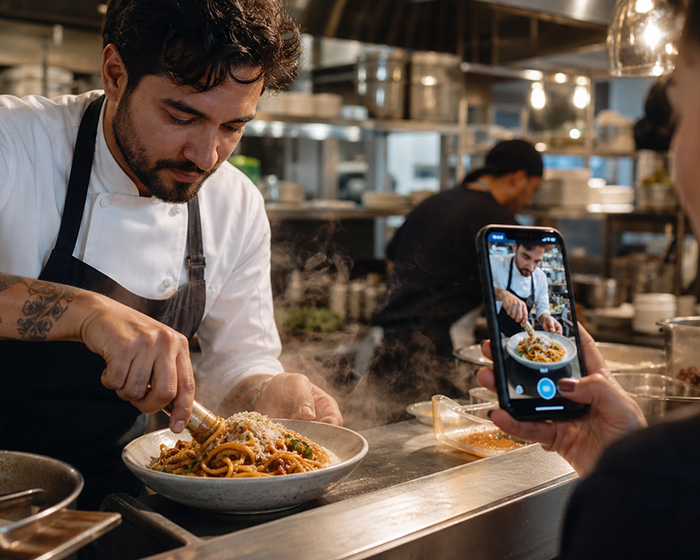
Facebook is still one of the most useful marketing platforms for restaurants, bars, cafes, diners, coffee shops, food trucks, bakeries, and local hospitality businesses. It may not feel as new or exciting as TikTok or Instagram, but for many restaurants, Facebook still reaches the exact people who matter most: local customers, families, community groups, event organizers, regular diners, and people deciding where to eat tonight.
The mistake many restaurant owners make is treating Facebook like an old noticeboard. They post a flyer, announce a special, share a blurry photo, and hope people show up. That approach is not enough in 2026.
Facebook now rewards useful, original, visual, local, and engaging content. Meta has also made video more important across Facebook, with all Facebook videos moving into the Reels sharing experience. Meta has said that all videos on Facebook will be shared as Reels, and that Reels will not have the same length or format restrictions as before.
For restaurants, this is actually good news. You do not need a huge media team. You need a clear plan, better photos, short videos, consistent offers, a menu that is easy to open, and simple ways for customers to order, book, visit, share, and come back.
This guide gives restaurant owners a practical Facebook marketing plan for 2026. It focuses on what you can actually do, not vague advice like “post more content.”
The Goal of Facebook Marketing for Restaurants
The goal is not just to get likes. Likes are nice, but they do not pay rent, staff, suppliers, or food costs.
The real goal of Facebook marketing is to move local people closer to buying from you. That might mean booking a table, ordering online, scanning your menu, joining your loyalty list, visiting for happy hour, attending an event, buying a gift card, or remembering your restaurant the next time they are hungry.
A strong Facebook strategy should help your restaurant do five things:
- Get discovered by people nearby.
- Show your food, drinks, atmosphere, and personality.
- Make your menu easy to find.
- Turn attention into visits, orders, bookings, and repeat customers.
- Build a local audience you can reach again.
If a post does not help with one of those goals, it probably does not need to be posted.
What Changed About Facebook Marketing in 2026?
Facebook marketing in 2026 is more visual, more local, more automated, and more content-driven than it used to be. A restaurant Page can still work, but only if it feels alive.
Meta has been making Facebook more video-focused, especially through Reels and recommended content. Meta also announced in March 2026 that it is prioritizing original content in Facebook Feed and Reels while reducing reach for unoriginal content. For restaurants, this means your own real food, staff, kitchen, dining room, customers, patio, and atmosphere matter more than generic graphics or copied content.
Meta Business Suite also lets businesses create and schedule posts, Stories, Reels, and ads across Facebook and Instagram, which means restaurant owners can plan content instead of posting randomly during a busy service.
For paid ads, Meta now organizes campaign objectives around six simplified goals: sales, leads, engagement, app promotion, traffic, and awareness. Restaurant owners should choose the objective based on the action they want, not simply boost every post without a plan.
The short version is this: Facebook still works for restaurants, but lazy Facebook marketing does not. A restaurant needs a page that looks current, a menu link that works, fresh visuals, regular Reels, local offers, smart ads, and a clear path from Facebook to ordering or visiting.
Step 1: Fix Your Facebook Page Before Posting More
Before you spend time or money on Facebook marketing, clean up your restaurant’s Facebook Page. A lot of restaurants are losing customers before the customer even sees a post because the Page is incomplete, outdated, confusing, or missing a menu link.
Your Facebook Page should quickly answer the questions customers care about:
- What kind of restaurant is this?
- Where is it?
- Is it open now?
- Can I see the menu?
- Can I order online?
- Can I book a table?
- Does it look good?
- Is it active?
- Is this place worth visiting?
Update your Page name, category, address, phone number, hours, website, menu link, ordering link, booking link, cover image, profile image, and About section. Make sure your restaurant name, address, and phone number match your website and Google Business Profile as closely as possible.
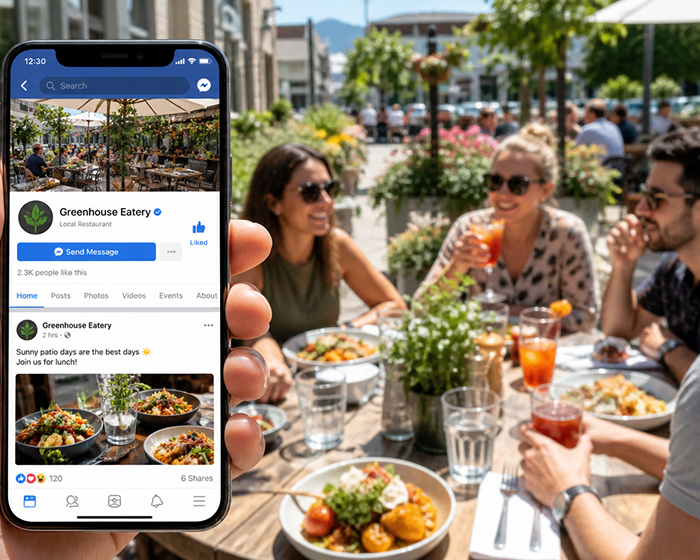
Your cover image should not be a random logo on a blank background. Use it to sell the experience. A great cover image might show your best-selling dish, a full table of food, your bar at night, your patio, your brunch spread, or your restaurant packed with happy guests.
Your profile image should usually be your logo or a clear mark that people recognize. Your cover image should do the emotional selling.
Step 2: Make Your Menu Easy to Open
For restaurants, the menu is one of the most important marketing assets on Facebook. If someone discovers your restaurant and cannot quickly view your menu, you are making them work too hard.
Do not bury your menu in a photo album from three years ago. Do not make customers pinch and zoom a blurry PDF. Do not post menu screenshots that become outdated as soon as prices or items change.
Your Facebook Page should link to a fast, mobile-friendly online menu that is easy to read and easy to update. Ideally, your menu should also connect to online ordering, table QR codes, loyalty tools, print menus, and digital menu boards so your restaurant has one accurate menu everywhere.
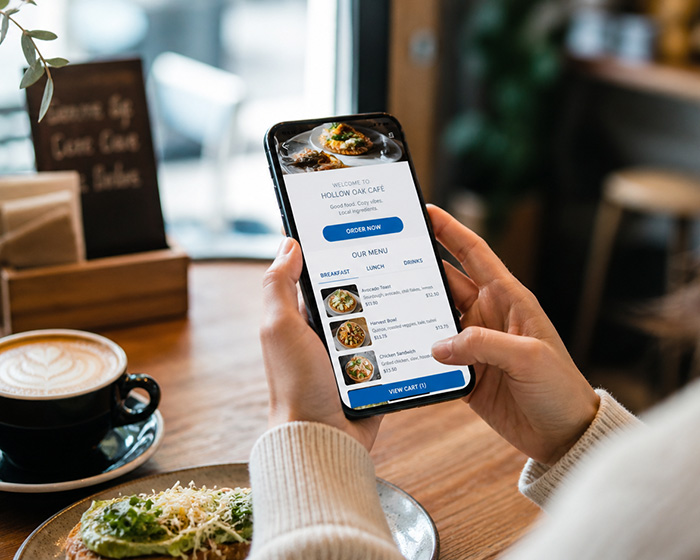
This is where a platform like Happy Menu helps. Instead of sending people from Facebook to a static PDF, restaurants can send customers to a beautiful online menu that can include ordering, QR codes, loyalty, and instant updates. That matters because a Facebook click is only valuable if the customer can easily decide what to do next.
Step 3: Use Facebook as a Local Discovery Tool
Facebook is not just a social platform. For restaurants, it is part of local discovery. People find restaurants through friends, local groups, event pages, recommendations, comments, shares, and neighborhood conversations.
Your content should make it obvious where you are and why someone nearby should visit. Too many restaurants post content that could belong to any restaurant in any city. That is a missed opportunity.
Use local language in your posts. Mention your neighborhood, nearby landmarks, local events, sports games, schools, offices, theatres, campuses, beaches, parks, downtown areas, and community moments.
For example, instead of posting:
Happy hour tonight. Come in from 4–6.
Post something more local and specific:
Downtown dinner plans? Join us tonight from 4–6 for happy hour cocktails, crispy wings, and our new loaded fries. Perfect before the game, after work, or before heading home.
The second version gives people a reason, a time, a product, and a local context.
Step 4: Post Original Food Content, Not Generic Graphics
In 2026, restaurants should prioritize original photos and videos over generic Canva-style graphics. A clean graphic is useful sometimes, but your food is more persuasive than a template.
Meta’s current guidance around original content makes this even more important. Meta says it is prioritizing original content in Feed and Reels and reducing distribution for unoriginal content.
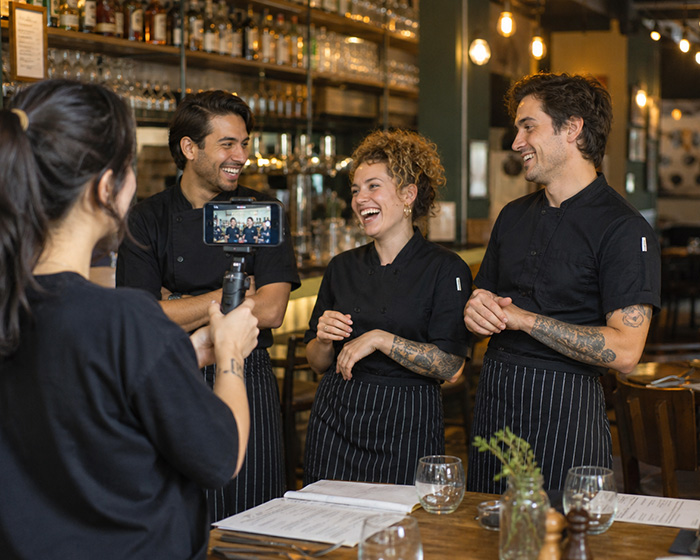
For restaurants, original content is easy to define. It is your burger being built. Your chef plating pasta. Your bartender shaking cocktails. Your bar filling up before happy hour. Your patio on a sunny day. Your brunch plates hitting the pass. Your staff laughing before service. Your regular customers celebrating a birthday. Your actual restaurant.
A simple phone video of your best dish can outperform a polished graphic because it feels real. Customers want to know what the food looks like, what the place feels like, and whether they can imagine themselves there.
Step 5: Build Your Weekly Facebook Content Around Repeatable Themes
Restaurant owners are busy. The easiest way to stay consistent is to stop inventing new ideas every day. Instead, create repeatable content themes.
Here is a simple weekly structure:
- Monday: Weekly special, new dish, or chef recommendation.
- Tuesday: Behind-the-scenes kitchen or prep video.
- Wednesday: Customer favorite or best-selling dish.
- Thursday: Weekend booking reminder, event, or live music announcement.
- Friday: Cocktail, dinner, bar, patio, or date-night post.
- Saturday: Short Reel showing atmosphere, food, drinks, and guests.
- Sunday: Brunch, family dining, takeout, or loyalty reminder.
You do not need to post every single day, but you do need a rhythm. A restaurant Page that has not posted in six weeks makes customers wonder whether the business is still active, whether the menu is current, or whether the hours are accurate.
If daily posting is too much, start with three posts per week: one food post, one people or atmosphere post, and one offer or action post.
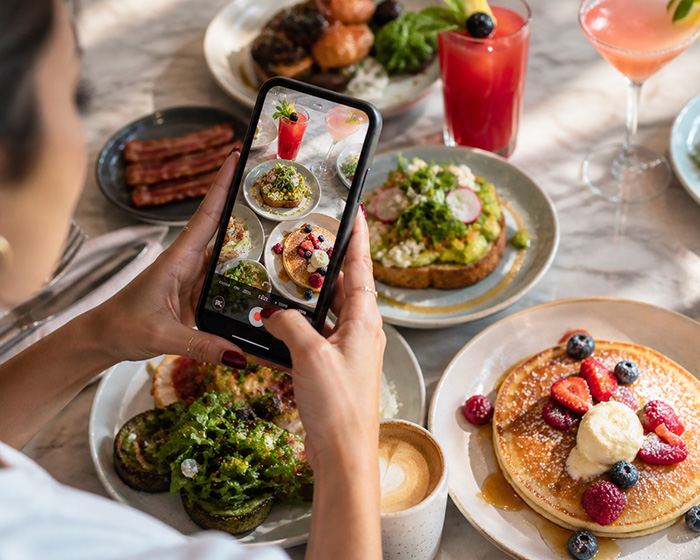
Step 6: Use Reels to Show the Experience
Reels should be a major part of restaurant Facebook marketing in 2026. You do not need complex editing. You need short, clear, appetite-building videos.
Meta has said Facebook’s recommendations engine is being upgraded to show newer and more relevant Reels, and that Facebook is continuing to become a home for different types of video.
Good restaurant Reels are simple. Show the food. Show movement. Show the atmosphere. Show the payoff.
Here are easy Reel ideas for restaurants:
- A burger being stacked from grill to plate.
- A pizza coming out of the oven.
- A cocktail being shaken and poured.
- A brunch table filling up with plates.
- A server carrying food to a table.
- A before-and-after shot of an empty dining room becoming busy.
- A chef adding the final garnish to a signature dish.
- A close-up of melted cheese, steam, sauce, sizzling meat, or fresh herbs.
- A “what to order if it is your first time here” video.
- A “three dishes regulars love” video.
- A “date night at our restaurant” video.
- A “lunch under $15” or “best share plates for a group” video.
Every Reel should be built around one idea. Do not try to show the whole restaurant, the whole menu, the full team, the parking lot, and every special in one video. One Reel, one message.
Step 7: Use Strong Hooks in the First Three Seconds
People scroll quickly. Your post or Reel needs to earn attention immediately.
Good hooks for restaurant Facebook Reels include:
- “The dish our regulars order every week.”
- “If you love spicy food, order this.”
- “Our most underrated lunch item.”
- “Date night idea in [your city].”
- “POV: you found your new favorite brunch spot.”
- “What $20 gets you at our restaurant.”
- “The cocktail people keep asking about.”
- “Come with us before dinner service starts.”
- “Three reasons locals love our patio.”
- “This is what we are serving this weekend.”
A hook does not have to be clever. It has to be clear enough to make the right person stop scrolling.
Step 8: Stop Posting Engagement Bait
Do not rely on posts that say “Like this if you love pizza,” “Tag three friends,” “Comment YES,” or “Share to win” unless you understand the rules and have a real campaign structure. Meta describes engagement bait as posts that explicitly request votes, shares, comments, tags, likes, or reactions for reasons other than a specific call to action.
This does not mean you cannot ask questions. It means your question should be natural and useful.
Bad engagement-bait style:
LIKE this post if you love tacos and TAG five friends!
Better:
We are testing two taco specials for next month: slow-cooked beef brisket or crispy fish with lime slaw. Which one would you order first?
The better version creates a real conversation around your menu and gives customers a reason to respond.
Step 9: Turn Specials Into Campaigns, Not One-Off Posts
A common restaurant mistake is announcing a special once and then moving on. Most customers will not see that one post. Even if they do see it, they may not be ready to visit at that exact moment.
Instead, turn specials into mini campaigns.
For example, if you are promoting a new burger special, create:
- A close-up photo of the finished burger.
- A Reel of the burger being made.
- A staff taste-test video.
- A post explaining when it is available.
- A reminder post on the day it launches.
- A customer reaction or review post.
- A final “last chance this weekend” post.
One special can become a week of content. That is much easier than constantly trying to invent new ideas.
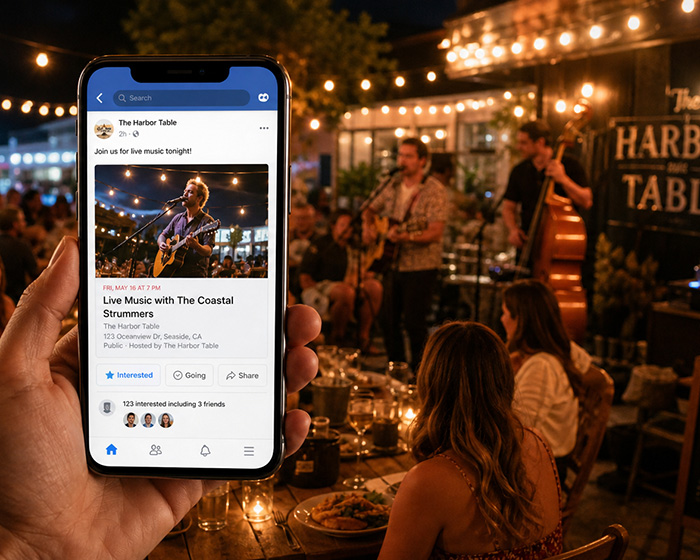
Step 10: Use Facebook Events for Real Events
If your restaurant hosts trivia, live music, tastings, holiday dinners, sports watch parties, comedy nights, wine dinners, brunch events, taco nights, karaoke, or community fundraisers, create Facebook Events.
Events are useful because they give customers a specific date, time, place, and reason to attend. They also create a page that can be shared, saved, discussed, and promoted.
A good restaurant event listing should include:
- A clear event title.
- Date and time.
- Location.
- What is included.
- Food and drink details.
- Price, minimum spend, or free entry details.
- Booking or ordering link.
- Photos or video from previous events.
- Parking, age restrictions, or seating information if relevant.
Do not title the event “Friday Night.” Title it like a customer would describe it to a friend: “Live Jazz & Cocktails This Friday at [Restaurant Name].”
Step 11: Use Local Facebook Groups Carefully
Local Facebook Groups can be powerful for restaurants, but they should be handled with respect. Many neighborhood groups have strict rules against spam, daily promotions, or business advertising.
Do not join every group and dump your menu link. That is how restaurants annoy the community and get blocked.
A better approach is to participate like a local business owner. Answer questions. Recommend nearby things to do. Share genuinely useful updates when allowed. Thank customers who mention you. Support local events. Offer value instead of only posting promotions.
Useful group-friendly posts might include:
- “We are opening early this Saturday for the parade crowd.”
- “We added more outdoor seating for the weekend.”
- “We are collecting donations for the local shelter this week.”
- “We have a few tables left for Mother’s Day brunch.”
- “We are hiring servers and kitchen staff locally.”
Before posting in any group, read the rules. If business posts are only allowed on certain days, follow that rule exactly.
Step 12: Use Facebook Ads With a Clear Objective
Facebook ads can work well for restaurants, but boosting random posts is not a strategy. You need to decide what you want the ad to do.
Meta Ads Manager asks advertisers to choose a campaign objective that matches the result they want, such as awareness, traffic, engagement, leads, or sales.
For restaurants, common ad goals include:
- Awareness: Reach people near your restaurant and make them aware you exist.
- Traffic: Send people to your menu, ordering page, booking page, or event page.
- Engagement: Get more interaction with a post, Reel, event, or Page.
- Leads: Collect customer details for catering, private events, functions, or VIP offers.
- Sales: Drive online orders, gift card purchases, ticket sales, or tracked conversions.
If your restaurant wants online orders, choose an objective and setup that supports that action. If you want people to discover your new location, awareness may be better. If you want private party inquiries, leads may be the right fit.
Step 13: Target Locally, Not Randomly
Restaurants are local businesses. Most of your Facebook ad spend should focus on people who can realistically visit, order, book, or attend.
Meta Ads Manager includes location targeting so advertisers can show ads to people in specific geographic areas.
A restaurant’s local targeting might include:
- People within a few miles of the restaurant.
- People near nearby offices during lunch hours.
- People near hotels and tourist areas.
- People near a stadium, theatre, university, or event venue.
- People in surrounding suburbs who might visit on weekends.
Do not automatically target an entire state or major metro area unless your restaurant has a reason to reach that broadly. A neighborhood cafe does not need to advertise to people 40 miles away unless it is promoting something unique enough to justify the trip.
Step 14: Match the Ad to the Customer’s Intent
Different customers need different messages. Someone who has never heard of you needs a reason to care. Someone who follows you already may only need a reminder. Someone who visited your website may need a direct offer.
Use different ad messages for different audiences:
- Cold local audience: “New to the neighborhood? Try our wood-fired pizza, cocktails, and weekend brunch.”
- Warm audience: “You have seen our menu. Now come try the dish everyone is talking about.”
- Past website visitors: “Still deciding on dinner? Order direct from our menu tonight.”
- Event audience: “Trivia night is back this Thursday. Book your table before it fills.”
- Loyalty audience: “Members get early access to this weekend’s special.”
This is one of the biggest differences between weak Facebook marketing and strong Facebook marketing. Weak marketing says the same thing to everyone. Strong marketing matches the message to the customer’s stage of decision-making.
Step 15: Use the Right Call-to-Action
A restaurant Facebook post should usually tell customers what to do next. This does not need to be aggressive. It simply needs to be clear.
Meta Ads Manager supports call-to-action buttons designed to encourage people to take an action aligned with the campaign goal.
Useful restaurant calls-to-action include:
- View the menu.
- Order online.
- Book a table.
- Join our loyalty list.
- See today’s specials.
- Get directions.
- Call now.
- Send us a message.
- Reserve your spot.
- Plan your visit.
Do not end every post with “come on down.” Be more specific. Tell the customer exactly what action makes sense.
Step 16: Install Tracking Before You Spend Heavily
If your restaurant runs ads to an online ordering page, menu page, booking page, catering form, or gift card page, you should think seriously about tracking.
Meta Pixel can help track customer actions on your website, build audiences, and optimize ad campaigns. Meta also describes the Conversions API as a way to create a direct connection between marketing data and Meta’s ad optimization systems.
For restaurants, useful tracked actions might include:
- Viewed menu.
- Clicked order online.
- Started checkout.
- Completed order.
- Clicked reserve table.
- Submitted catering inquiry.
- Joined loyalty list.
- Purchased gift card.
You do not need to become a technical ads expert, but you should know whether your ads are producing real actions. A post with many likes but no orders may not be your best ad. A post with fewer likes but more menu clicks may be more valuable.
Step 17: Use Small Budgets to Test Creative
Many restaurants waste money because they try to promote one perfect ad. A better approach is to test several simple creative angles with smaller budgets, then put more money behind the winner.
Test different hooks, images, Reels, offers, and audiences. For example, a casual restaurant might test:
- A close-up burger photo.
- A Reel of the burger being made.
- A family dining image.
- A happy hour cocktail video.
- A patio atmosphere video.
- A direct online ordering offer.
Look at the results. Which ad gets menu clicks? Which ad gets bookings? Which ad gets online orders? Which ad brings in comments from real local customers?
Let customer behavior guide your next move. Restaurant owners often guess what people want to see. Facebook ads can help you find out.
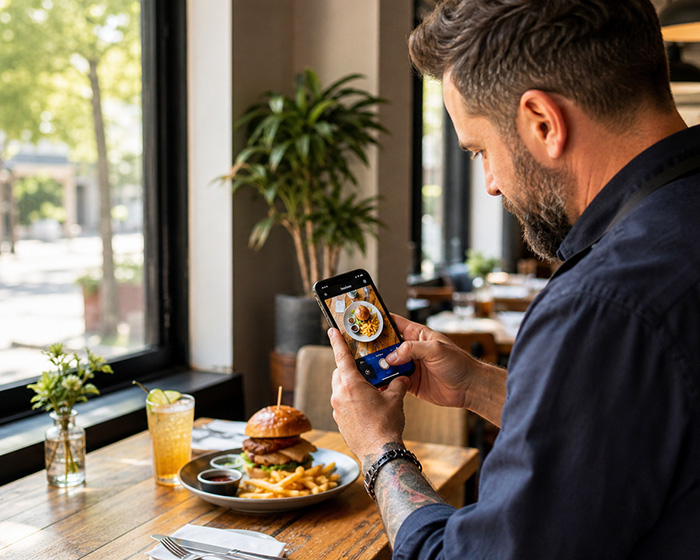
Step 18: Use Photos That Make People Hungry
Good food photography does not need to be expensive, but it does need to be intentional.
Use natural light when possible. Shoot near a window or outside in shade. Wipe the plate. Remove clutter. Show texture. Show steam. Show sauce. Show the food close enough that people can imagine eating it.
For restaurants, the best Facebook images often include:
- Signature dishes.
- Tables full of food.
- Fresh ingredients.
- Cocktails and drinks.
- Outdoor dining.
- Happy customers, with permission.
- Staff and chefs.
- Seasonal specials.
- Behind-the-scenes prep.
- Before-and-after transformation shots.
Avoid dark, blurry, zoomed-out food photos. If the dish does not look good in the photo, do not post it. Your Facebook content should make people hungry, not unsure.
Step 19: Promote Direct Ordering Without Sounding Desperate
Many restaurants want customers to order direct instead of using third-party delivery apps. That is a smart goal, but the messaging matters.
Do not only complain about delivery apps. Give customers a positive reason to order direct.
Better messages include:
- “Order direct from our menu for the fastest pickup experience.”
- “The best way to support our restaurant is to order direct.”
- “Order from our website and join our loyalty list for future offers.”
- “Skip the extra app steps and order directly from us.”
- “Our full menu is available for direct online ordering.”
The goal is to make direct ordering feel easier, better, and more rewarding for the customer.
Step 20: Build a Loyalty List From Facebook Traffic
One of the biggest problems with social media is that you do not fully own the audience. A customer may like your post today and never see your next one.
That is why Facebook should feed your loyalty system, email list, SMS list, or customer database. The real win is not just one click. The real win is permission to bring customers back.
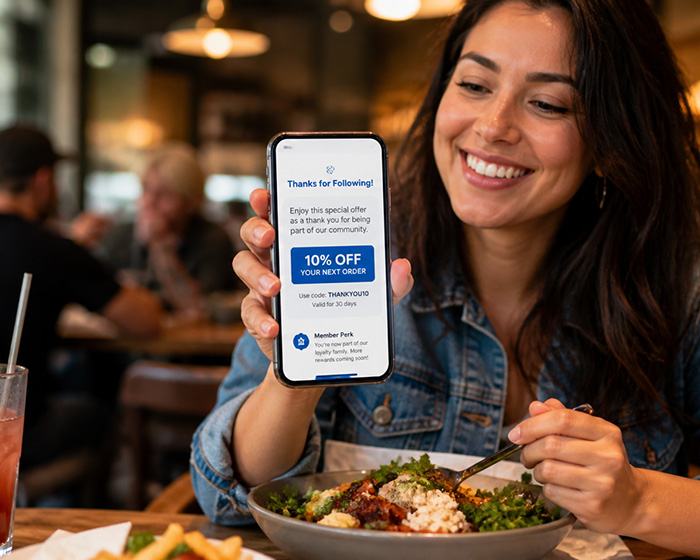
Use Facebook posts and ads to invite customers to join your loyalty list. Offer a reason, such as birthday rewards, early access to specials, member-only deals, new menu alerts, happy hour reminders, or limited-time offers.
Examples:
- “Join our loyalty list and get first access to new specials.”
- “Want the weekend special before everyone else? Join our VIP list.”
- “Love our brunch? Join our loyalty list for exclusive offers.”
- “Get menu updates, specials, and rewards from your favorite local spot.”
Facebook gets attention. Loyalty tools help you keep the relationship.
Step 21: Reply to Comments and Messages Quickly
Facebook is not just a publishing tool. It is a customer service channel.
Customers may ask whether you take reservations, whether you have gluten-free options, whether your patio is open, whether dogs are allowed outside, whether you serve brunch, or whether you can handle a party of 12.
Replying quickly can turn a question into a booking or order. Ignoring messages can send customers to another restaurant.
Create saved replies for common questions:
- Menu link.
- Booking link.
- Ordering link.
- Hours.
- Parking details.
- Dietary options.
- Private event inquiries.
- Catering inquiries.
- Happy hour details.
A fast, helpful reply makes your restaurant feel professional before the customer even arrives.
Step 22: Use Reviews and Customer Content Carefully
Customer reviews, tagged posts, and user-generated content can be powerful, but restaurants should use them responsibly.
If a customer posts a great photo and tags your restaurant, ask permission before using it in your own marketing. If a customer leaves a great review, consider turning a short excerpt into a post, but avoid making exaggerated claims.
Meta’s advertising standards prohibit deceptive or misleading practices in ads. Restaurant ads should be honest about offers, prices, availability, and terms.
Good review-based post:
“The best brunch we have had downtown.” Thank you to everyone who has visited us this month. Our weekend brunch menu is available Saturday and Sunday from 9 AM.
Weak or risky version:
Everyone says we are the best restaurant in town. Come see why.
The first version is specific and believable. The second sounds exaggerated.
Step 23: Create Facebook Posts Around Customer Decisions
Restaurant marketing works best when it answers the questions customers are already asking.
Instead of only posting what you want to sell, post content that helps customers decide.
Examples:
- “Best dishes for your first visit.”
- “What to order if you love spicy food.”
- “Our best share plates for a group.”
- “Quick lunch options when you only have 30 minutes.”
- “Best cocktails before dinner.”
- “Family-friendly dishes kids love.”
- “Vegetarian favorites on our menu.”
- “What to order before the game.”
- “Best dishes for date night.”
This type of content is useful because it reduces decision friction. The easier you make the decision, the more likely customers are to choose you.
Step 24: Use Seasonal and Local Moments
Restaurants should plan Facebook content around the calendar. Holidays, sports seasons, school breaks, weather, local events, and community moments all create reasons for customers to eat out or order in.
Content opportunities include:
- Valentine’s Day.
- Super Bowl weekend.
- March Madness.
- St. Patrick’s Day.
- Easter brunch.
- Mother’s Day.
- Father’s Day.
- Graduation season.
- July 4th.
- Back-to-school season.
- Halloween.
- Thanksgiving week.
- Holiday parties.
- New Year’s Eve.
- Local festivals and parades.
- Concerts, sports games, and theatre nights.
Do not wait until the day before a major restaurant holiday to post. Start promoting early, then remind customers as the date gets closer.
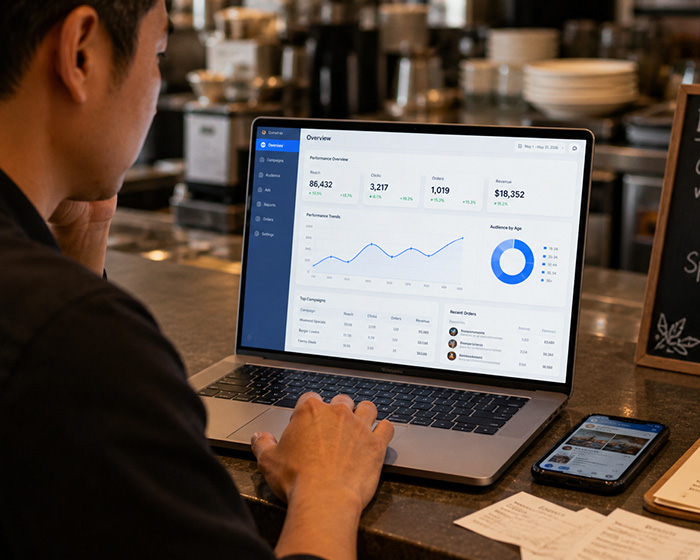
Step 25: Create a Simple Facebook Funnel
A funnel sounds complicated, but for restaurants it can be simple.
Think of your Facebook funnel like this:
- Discovery: A local customer sees your food, Reel, event, or ad.
- Interest: They visit your Page or click your menu.
- Decision: They check prices, dishes, hours, atmosphere, reviews, or ordering options.
- Action: They order, book, call, get directions, or visit.
- Retention: They join your loyalty list, follow your Page, or come back for another offer.
Most restaurants only focus on discovery. The stronger strategy is to make every stage easier.
That means your Facebook post should lead to a good menu. Your menu should lead to ordering or booking. Your ordering or booking flow should lead to loyalty. Your loyalty list should lead to repeat visits.
Step 26: Do Not Depend Only on Organic Reach
Organic posting is important, but it is not enough by itself. Even good posts may not reach all of your followers. A practical Facebook strategy uses both organic content and paid promotion.
Use organic content to keep your Page alive and build trust. Use paid ads to reach more local people when you have something worth promoting.
Good reasons to run Facebook ads include:
- New restaurant opening.
- New menu launch.
- Online ordering launch.
- Happy hour promotion.
- Lunch special.
- Weekend brunch.
- Live music or event.
- Holiday booking campaign.
- Catering or private event campaign.
- Gift card promotion.
Do not advertise everything. Advertise the things that have a clear audience, clear offer, clear action, and enough profit potential to justify the spend.
Step 27: Use Advantage+ Carefully, But Do Not Let Automation Replace Strategy
Meta’s advertising tools increasingly use automation and AI. Meta describes Advantage+ as a suite of products that helps optimize campaigns in real time and match ads to people likely to be interested.
This can help restaurants, especially when testing creative or simplifying campaign setup. But automation does not fix weak food photos, unclear offers, broken menu links, bad landing pages, or poor customer experience.
Use automation to help delivery and optimization. Do not use it as an excuse to skip strategy.
Step 28: Measure the Numbers That Matter
Do not judge Facebook marketing only by likes. Track numbers that connect to business outcomes.
Important restaurant Facebook metrics include:
- Menu clicks.
- Ordering clicks.
- Booking clicks.
- Calls.
- Direction clicks.
- Messages.
- Event responses.
- Online orders.
- Gift card purchases.
- Loyalty signups.
- Cost per result for ads.
- Revenue from tracked campaigns.
Also pay attention to content signals:
- Which dishes get the most saves or shares?
- Which Reels keep people watching?
- Which posts get real comments from local customers?
- Which offers create orders or bookings?
- Which photos make people ask questions?
The best Facebook strategy improves over time because you learn what your customers respond to.
A 30-Day Facebook Marketing Plan for Restaurants
If you want a practical starting plan, use this 30-day structure.
Week 1: Clean Up and Prepare
- Update your Facebook Page information.
- Add a clear online menu link.
- Update your cover image and profile image.
- Check your hours, address, phone number, and website.
- Create saved replies for common questions.
- Plan your content themes for the month.
- Choose one offer or special to promote.
Week 2: Create Original Content
- Film five short food videos.
- Take ten strong food photos.
- Record one behind-the-scenes kitchen clip.
- Record one atmosphere video during a busy service.
- Post three times during the week.
- Publish at least one Reel.
- Reply to every comment and message.
Week 3: Promote a Clear Offer
- Choose one offer, event, or special.
- Create a photo post for it.
- Create a Reel for it.
- Create a reminder post.
- Run a small local ad campaign if the offer has enough value.
- Send traffic to your menu, booking page, or ordering page.
Week 4: Review and Improve
- Check which posts performed best.
- Check which posts led to clicks or messages.
- Review ad results.
- Save winning creative ideas.
- Remove or improve weak offers.
- Plan next month’s content around what worked.
Repeat this monthly. Facebook marketing becomes easier when it becomes a system.
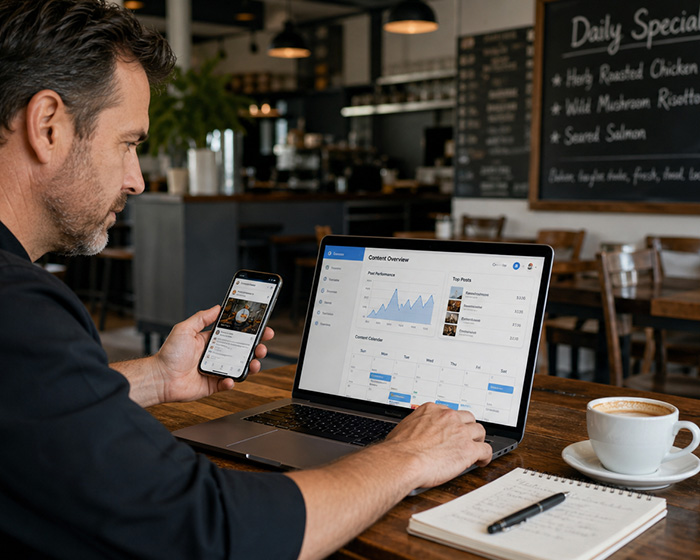
Example Facebook Posts for Restaurants
Use these as starting points and adapt them to your restaurant.
New Menu Item Post
New on the menu this week: our crispy chicken sandwich with house slaw, pickles, and spicy honey sauce. Available for dine-in and online ordering starting today. View the menu and plan your order.
Weekend Brunch Post
Weekend brunch is calling. Join us Saturday and Sunday for pancakes, eggs, coffee, cocktails, and our new breakfast board. Bring the family, book a table, or check the menu before you arrive.
Direct Ordering Post
Dinner at home tonight? Order direct from our online menu for pickup. Fresh food, easy ordering, and the best way to support your local restaurant.
Happy Hour Post
Happy hour starts at 4 PM. Join us for cocktails, cold beer, crispy fries, and share plates before dinner. Perfect for after work, before the game, or a quick catch-up with friends.
Event Post
Live music this Friday night. Come for dinner, stay for drinks, and enjoy local music from 7 PM. Tables are limited, so book early if you want the best seats.
Loyalty Post
Want first access to specials, new menu items, and member-only rewards? Join our loyalty list and let us send the good stuff straight to you.
Common Facebook Marketing Mistakes Restaurants Should Avoid
Many restaurants do not need more marketing complexity. They need to stop making the same simple mistakes.
- Posting blurry food photos.
- Using outdated menus.
- Not linking to online ordering or reservations.
- Only posting flyers and graphics.
- Ignoring comments and messages.
- Boosting posts without a goal.
- Targeting too broad an area.
- Promoting offers with unclear terms.
- Posting once and expecting results.
- Not using Reels.
- Not tracking menu clicks, orders, or bookings.
- Using engagement bait instead of real conversation.
- Letting the Page look inactive.
Fixing these basics can make a restaurant’s Facebook presence immediately stronger.
The Best Facebook Strategy for Restaurants in 2026
The best Facebook strategy for a restaurant is not complicated. It is consistent, local, visual, and action-focused.
Show real food. Show real people. Show the atmosphere. Make the menu easy to open. Give customers a reason to visit. Use Reels. Promote clear offers. Reply quickly. Track real actions. Build a loyalty list. Repeat what works.
Facebook should not sit separately from the rest of your restaurant marketing. It should connect to your online menu, ordering system, table QR codes, loyalty tools, events, email, SMS, Google Business Profile, and in-restaurant experience.
When everything connects, Facebook becomes more than a place to post updates. It becomes a practical tool for getting found, showing the right menu, winning direct orders, and bringing customers back.
FAQ
Is Facebook still worth it for restaurants in 2026?
Yes, Facebook is still worth it for many restaurants, especially local restaurants that rely on nearby customers, community awareness, events, families, regulars, and repeat visits. It works best when restaurants use original photos, Reels, local offers, clear menu links, and smart ads instead of random posts.
How often should a restaurant post on Facebook?
A practical starting point is three to five times per week. If that is too much, post at least three times per week: one food post, one atmosphere or people post, and one offer or call-to-action post. Quality matters more than posting for the sake of posting.
Should restaurants use Facebook Reels?
Yes. Reels are important because Facebook has become more video-focused, and restaurants naturally have strong visual content. Food preparation, cocktails, brunch spreads, kitchen moments, staff, events, and atmosphere all work well as short videos.
What should restaurants post on Facebook?
Restaurants should post food photos, Reels, specials, menu highlights, staff moments, behind-the-scenes clips, events, customer favorites, direct ordering reminders, booking reminders, loyalty offers, and local community updates.
Should restaurants boost Facebook posts?
Boosting can help, but restaurants should not boost every post. Boost posts that have a clear purpose, such as promoting a special, event, online ordering, new menu, happy hour, brunch, or holiday booking campaign. Choose an objective and target local customers who can realistically visit or order.
What is the best Facebook ad objective for restaurants?
The best objective depends on the goal. Use awareness to reach local people, traffic to send customers to your menu or booking page, engagement to promote events or posts, leads for catering and private events, and sales for online orders or tracked purchases.
How can restaurants get more online orders from Facebook?
Use strong food photos or Reels, link directly to a mobile-friendly online menu, promote direct ordering clearly, track ordering clicks where possible, and create posts around dinner, lunch, weekends, weather, sports nights, and limited-time specials.
Should restaurants post their menu on Facebook?
Restaurants should make their menu easy to access from Facebook, but the best option is usually a mobile-friendly online menu rather than a static image or old PDF. An online menu can be updated instantly and can connect to ordering, QR codes, loyalty, print menus, and digital menu boards.
What is the biggest Facebook marketing mistake restaurants make?
The biggest mistake is posting without a customer journey. A restaurant post should lead somewhere useful: a menu, ordering page, booking page, event page, loyalty signup, phone call, message, or visit. Attention is not enough. The customer needs a next step.
Final Thoughts
Facebook marketing for restaurants in 2026 is not about chasing every trend. It is about showing customers why they should choose your restaurant today.
Show the food clearly. Make the menu easy to find. Use Reels to bring the experience to life. Promote offers with a real reason to visit. Use ads with a goal. Reply to customers. Measure actions, not vanity metrics. Build a loyalty list so every new customer has a reason to come back.
Restaurant owners do not need to become influencers to win on Facebook. They need to become better storytellers, better local marketers, and better at turning attention into action.
Happy Menu
Beautiful online menus that help customers find and explore your food online
Per month
Free 14 day trial